
Biological Sciences
Biology is the study of life and living organisms.
Biologists seek to understand the structure, function, growth, origin, evolution and ecology of organisms and use this knowledge to solve problems in many fields, including primary production and conservation.
A degree in Biological Sciences can take you anywhere.
By embracing the abundant and wild natural resources of our Island State, our Biology courses offer unique opportunities to get up close and personal with nature so you can develop a deep understanding of biology.
Tasmania is the southern-most State of Australia and is renowned for its extraordinary habitat diversity and remarkable concentration of endemic plants and animals. Half of Tasmania is reserved in the form of National Parks, State Forests and World Heritage Wilderness; its ancient cool temperate rainforests, conifer-rich alpine fens and lowland sclerophyll communities abound with rare and endemic fauna and flora.
Tasmania is home to the:
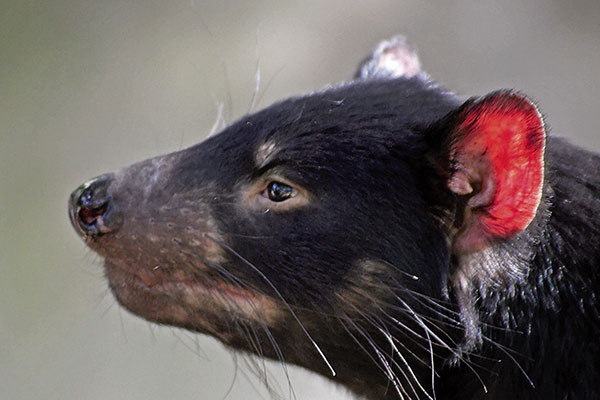
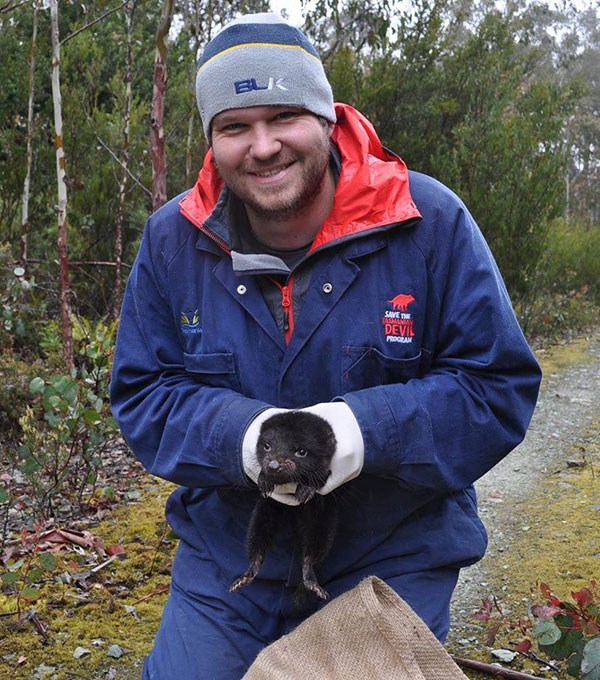
- Tasmanian Devil, the world’s largest marsupial carnivore,
- the Giant Freshwater Crayfish (Astacopsis gouldi), the world’s largest non-marine invertebrate, and
- Eucalyptus regnans, the world’s tallest flowering plant.
Practical, hands-on learning for applied research careers
When you study with us, your experiences go beyond the classroom. We incorporate our extraordinary natural surroundings into our curriculum, so that we can offer you opportunities to study plants and animals in their natural environments, to run experiments in controlled settings using state-of-the-art facilities, and to relate complex genomic data to real-world problems and processes.
Read more about our Study Options
Making the most of your university experience
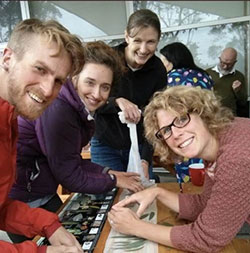
Your time at university is a great opportunity to meet other students, researchers and faculty members.
Our student-run Postgraduate Society for Biological Sciences (PSBS) organises networking events that connect individuals and research groups.
It's a great way to make friends, have fun and learn about opportunities in Biological Sciences. Some events include the annual Cribbage Night, Barefoot Lawn Bowls and a monthly board game night.
For more information please check the PSBS Facebook page or follow PSBS on Twitter.
Why study the Biological Sciences?
The study of life on Earth, from microscopic single-celled organisms to animals, plants and fungi,has always been important for humanity’s advancement. The centuries-long history of biologists has paved the way for inventions and discoveries that improve the quality of human life. More recently, the Biological Sciences are being called upon to help human societies understand the socio-ecological webs that are vital for building sustainable natural and agricultural systems in this era of massive change.
Biological science students work in the field, use sophisticated equipment in controlled laboratory environments, and apply the cutting-edge computer technologies and data science. Our students have opportunities to explore all these possibilities and many more!
Follow your passion and choose one of the following majors within Biological Sciences.
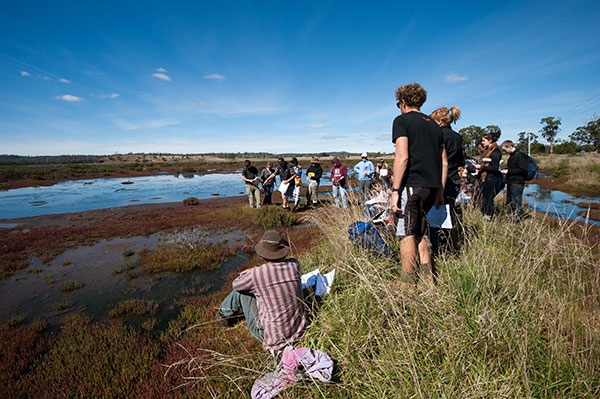
Have you considered the variety of physical and biological components of a forest? Or thought about how an ecosystem may be affected by drought, climate change or the introduction of an invasive species?
Ecology is the study of how animals and plants interact with one another and with their environment and how those interactions alter over time or in response to environmental change.
While studying Ecology, your theoretical understanding will be fortified with hands-on ecosystem surveys and data analysis. Ecology provides skills for careers in restoration, natural resource management, conservation and research.
Are you interested in how plants and animals develop and function, or how biological diversity arises and can be conserved and used for our benefit? Have you thought about a specialised career in biotechnology, agriculture, or medicine? Genetics is at the heart of all life on Earth, and addresses diverse problems; from understanding evolution, to preventing and curing disease, to improving food production, to deciding the best ways to restore our degraded natural world.
The study of Genetics involves gaining experience with laboratory and computational techniques for analysing DNA variation and function, and with living organisms in research, medical, industrial and natural settings.
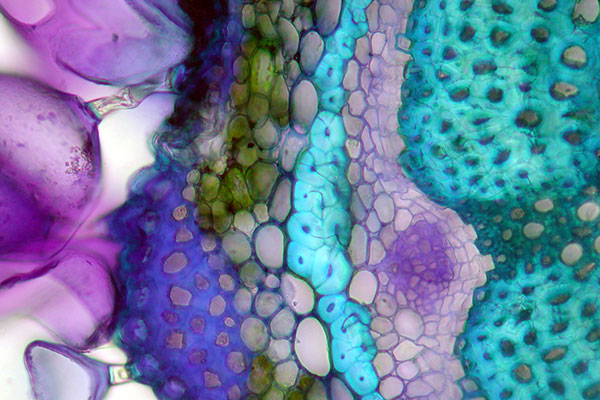
This is a truly life-enhancing science, exploring all aspects of plants and their impact on life on Earth.
Plants are intrinsic to shaping the world, they feed us (directly or indirectly), and provide fibre for clothing, wood for furniture, shelter and fuel, paper for books, spices for flavour, and drugs for medicine, not to mention, the oxygen we breathe!
What we study in Plant Science ranges from the miniscule to the vast, from molecular biology, to anatomy and physiology, and to landscape ecology. Study plant science: it will change your life.
Field Botany
Field Botany is an iconic part of the University of Tasmania's undergraduate offerings, remembered fondly by students for the past 30 years.
In this unit, students experience the major natural vegetation communities in Tasmania & the key processes shaping them.
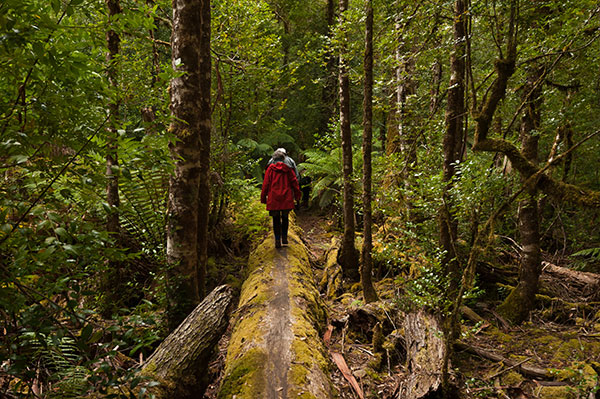
Students are introduced to the diversity of plants found in environments from near sea level moorlands to exposed alpine heaths, from rich basalt soil to ancient, weathered quartzite, and from sites ravaged by clear felling and burning to ancient cool, temperate rainforests.
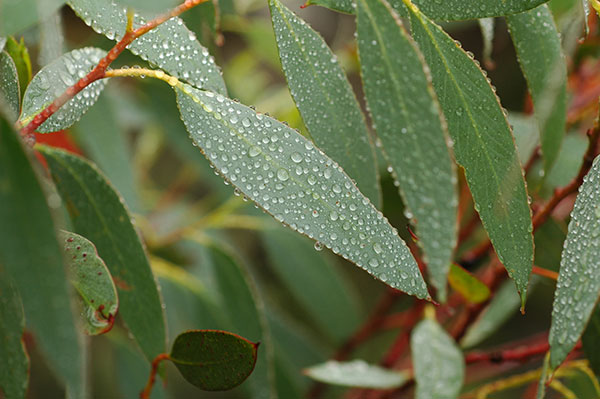
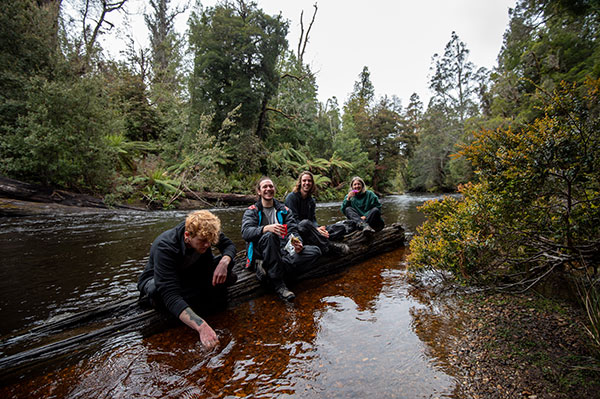
Image credit: Robert Wiltshire - Field Botany
Curious about the diversity of animals on earth, how they behave, and how they have adapted to the environments in which they live? Study Zoology! You will visit remote field sites and encounter native wildlife in a variety of terrestrial and aquatic ecosystems..
You will learn about relationships between structure and function in animals through lectures and laboratory practicals and learn how these traits evolved over time. Our Zoology course encompasses animal behaviour, evolution, physiology, development and distribution to provide knowledge and skills for careers in wildlife management, conservation and research.
Animal Evolution and Ecology
This weekend field trip to beautiful Fortescue Bay on the Tasman Peninsula provides hands-on experience with Tasmania’s native animals: trapping, habitat surveys and analytical methods. Activities can include:
- Mark-recapture study of blue wrens or brush tailed possums
- Distribution of sand-hoppers
- Intertidal fauna survey
- Freshwater fauna survey
- Reptile survey
- Seine netting
- Bush bird transect surveys
- Small mammal trapping (including bat trapping) and spotlighting
- Animal track and scat identification
Careers
Our graduates have forged exciting careers around the world, in research, industry, education, government and independent NGOs (non-government organisations).
After completing your undergraduate degree, you may look to gain industry experience, or continue studying and complete a research Honours year, where you will conduct your very own research project, with plenty of support and guidance from your supervisors. Research Honours can give you valuable practical experience prior to securing a job; or it might be the first step of a career in research.
Biological Sciences is relevant to the entire planet. No matter which area fascinates you most or what motivates you, there are exciting career opportunities to be found right here in Tasmania, elsewhere in Australia and around the globe. Every environment on earth has its own unique biological challenges and after completing a course in Biological Sciences, you will be well-equipped to help develop solutions.
Ecologists study ecosystems at a variety of spatial scales from small scale soil microbiology to the wider implications of plant-fungi interactions and how they affect forest health. Ecologists study plants, animals and their interactions with their physical environment. An ecologist may investigate the impact of the devil-facial tumour disease on devil declines and how that may impact the populations and behaviours of native and introduced species in that ecosystem.
Graduates have found careers as research scientists, natural resource managers, environmental consultants, naturalists, restoration ecologists and conservation biologists.
A qualification in genetics opens many doors to careers in health sciences (e.g., immunology, genomics, pharmacology), clinical research, personalised medicine, genetic counselling, forensics and ancestry, biotechnology, agriculture, forestry, conservation and restoration.
Geneticists are employed by health services, agricultural companies, biotech companies, agricultural services, government departments, museums, zoos and botanical gardens, seed banks and sperm banks.
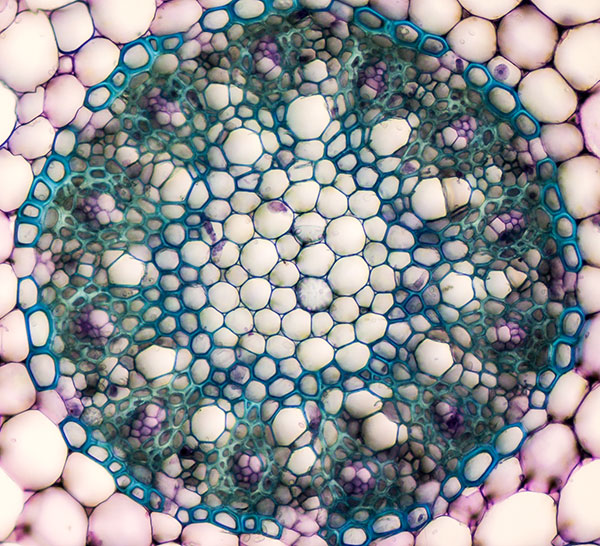
Plant scientists study a variety of topics related to the photosynthesising organisms that convert energy from the sun to provide much of the food, fuel, and fibre used in the world. This field can lead to employment in diverse fields.
Graduates have found careers in research, biotechnology, forestry, horticulture, aquaculture, botanical gardens and herbaria, teaching, and government departments of primary industry and environment.
Zoologists study a variety of topics related to wildlife from animal behaviour to evolution and from taxonomy to physiology.
This field can lead to employment in the field monitoring wildlife, studying the distribution of animals in terrestrial and aquatic systems or measuring the impact of introduced species or disease spread.
Laboratory based employment can involve studying animal physiology to improve fisheries and livestock health and breeding or analysing animal behaviours in controlled environments.
Graduates have found careers as researchers, behavioural ecologists, disease ecologists, reproductive biologists for captive breeding programs, environmental consultants, conservation biologists and laboratory technicians.
Research
Research leaders break ground in Biological Sciences
Biological Sciences at the University of Tasmania is consistently rated in the top 100 Universities worldwide. Our research teams are at the cutting edge of research in plant and animal sciences. Much of our research involves collaboration with industry. External stakeholders include: Department of Primary Industries, Parks, Water and Environment; Forest Practices Authority; Hop Products Australia; Hydro Tasmania; Inland Fisheries Service; Tree Breeding Australia; Grains Research and Development Corporation.
In addition to our staff being world leaders in their research disciplines (including three Fulbright Scholars and a Churchill Fellow), we are particularly proud to host a number of current and former ARC Discovery Early Career Research Fellows and ARC Future Fellows, an ARC Australian Laureate Fellow and four researchers who have achieved the prestigious, internationally-recognised status of “highly cited researcher*”.
Postgraduate Research
Biological Sciences offers postgraduate projects in all of our specialisations and strengths. You can contact any of the staff mentioned in those specialisation.
*Clarivate Analytics lists of Highly Cited Researchers
Our Facilities
Biological Sciences has on-site and off-site facilities for innovative research in genetics, zoology, plant science, and ecology, including controlled environment glass houses, quarantine and PC2 facilities, animal enclosures and field-based experimental sites
Many Biological Sciences researchers conduct research in the University of Tasmania’s Central Science Laboratory (CSL) that provides world class facilities and expertise, e.g., in mass spectrometry, electron microscopy and ‘-omics’ analyses. For projects with big data we collaborate with National Research Facilities for high performance computing and cloud research.
