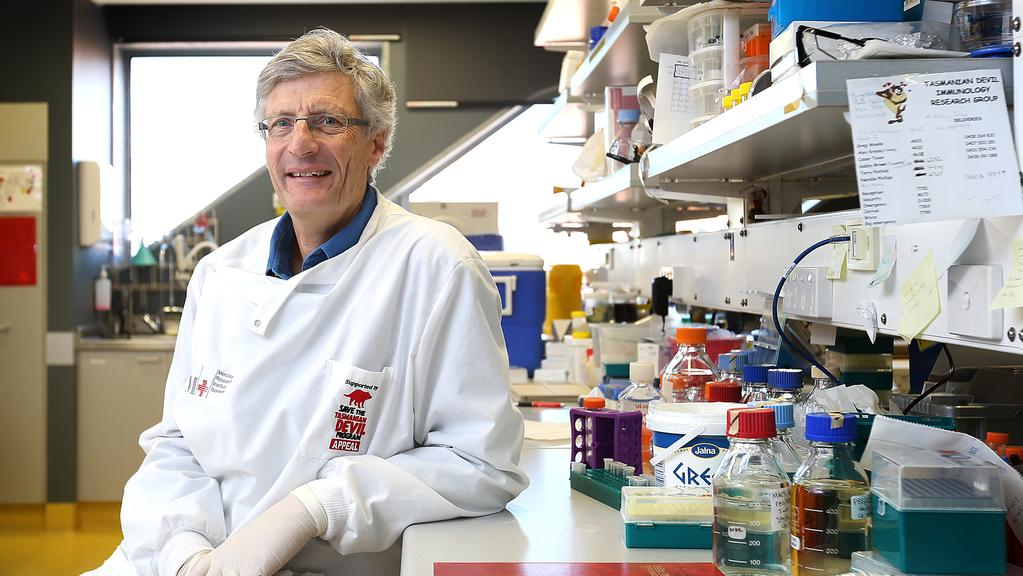
I am a Senior lecturer in Physics and Radio astronomy. My major areas of research are in the formation of massive stars, in particular through the study of methanol and other maser species and in AGN (active galactic nuclei) through the study of water megamasers.
Career Summary
I received my PhD from the University of Tasmania in 1996. I was appointed as a lecturer in physics in 2000 and promoted to senior lecturer in 2005.
I am a member of the Australian Institute of Physics, a member of the International Astronomical Union and a Fellow of the Astronomical Society of Australia.
I am currently a member of the ASA (Astronomical Society of Australia) Council. I was a member of the "University Facilities" and "Nearby Universe" working groups for the 2005 Astronomy Decadal review and a member of the National Committee for Astronomy working ground to produce a LOFAR options paper in 2003.
Research Funding
In the last 5 years I have been a chief investigator on 4 successful ARC projects (2 Discovery, 1 Special Research initiative, 1 LIEF) which have received total funding of more than $1M. Details of research funding in the last 5 years :
- 2003-2005, Ellingsen, Godfrey & Caswell, ARC Discovery Grant ($180k) “Masers – High Resolution Probes of Star Formation”
- 2004, Ellingsen & Tingay, UTAS Internal Research Grant Scheme ($20k) “Pulsar Proper Motions with the Next Generation of VLBI recorders”
- 2005, Dickey, Ellingsen, Forbes, Norris, Govind & Schmidt, ARC LIEF Grant ($402k) “A 10Gb/s fibre optic link to the Mt Pleasant and Mt Canopus observatories”
- 2005, Ellingsen & Greenhill " UTAS Research Support Scheme ($15k) “Investigations of the Structure and Dynamics of AGN on sub-parsec scales”
- 2005-2006, Ellingsen, Tzioumis, Tingay, Dickey, ARC Special Research Initiative ($185k) “Real-time very long baseline interferometry”
- 2007-2009, Dickey, Ellingsen, McCulloch, ARC Discovery ($356k) “Radio Interferometer Studies of Compact Astronomical Sources”
Awards and Major Projects
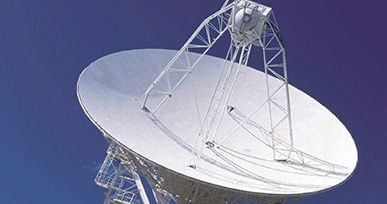
- 1995-1997 Played a major role in the conversion of the Ceduna 30m antenna to an astronomical facility. Particularly the setup of the antenna control software and basic computing systems.
- 1997-2002 Hobart and Ceduna radio telescopes were two of the most active southern ground telescopes for the mission.
- 1999 Royal Society of Tasmania, New Doctoral Award
- 2002 Research Excellence Award, Faculty of Science and Technology, University of Tasmania
- 2003 Engineering Excellence Award, Engineers Australia
- 2005- Co-Investigator on Parkes/Jodrell Methanol Multibeam project.
- 2006-2011 Chair of operations subcommittee and member of antennas subcommittee for AuScope VLBI array project, part of NCRIS 5.13
- 2007- Co-Investigator on VRAD experiment as part of SELENE (Japanese Lunar) mission.
Research Interests
My primary research interest is in the study of the formation of high-mass stars, particularly through radio astronomy observations of methanol masers. High mass stars form in regions of dense gas and dust which completely obscures them from view at optical wavelengths. Fortunately radio frequency radiation passes through the gas and dust unhindered. Interstellar masers are naturally occurring radio frequency lasers, which are often associated with newly formed large stars. The fundamental aim of my work is to measure the physical conditions, such as temperature, density and pressure around from observations of the masers in order to understand important questions such as how planets form. Recently I have been working on using the presence/absence of various interstellar maser species/transitions as an evolutionary clock for high-mass star formation regions. I am a member of the international methanol multibeam collaboration, which is using the Parkes and Jodrell Bank radio telescopes to survey the entire Galaxy for methanol masers to undertake the first complete census of high-mass star formation in our Galaxy.
Other active research interests including studying active galactic nuclei through observations of interstellar scintillation (ISS). This is where the interstellar medium causes intensity fluctuations in some distant radio sources (analogous to the twinkling of stars caused by the Earth's atmosphere). By tracing changes in the timescale of the intensity fluctuations throughout the year it is possible to make inferences about the AGN on microarcsecond angular scales (factors of 10-100 better than can be achieved through any other current technique). Our program to observe interstellar scintillation in AGN with the Ceduna radio telescope received an Engineering Excellence award from Engineers Australia. Along with John Dickey and Peter McCulloch I recently received ARC funding to construct an interferometer using the Mt Pleasant 26m and 14m radio telescopes for further scintillation studies of active galaxies.
Research Areas:Teaching
I am involved in teaching at all levels of the physics major. I am the first year coordinator for physics and teach the dynamics/mechanics, special relativity section of KYA101. I teach the second year electromagnetism and thermodynamics components of KYA212. I also teach the third year advanced electromagnetism unit KYA320 and the third year atomic and nuclear physics unit KYA323. Additional learning resources for all of these courses are available via WebCT/Vista.
I currently supervise 5 PhD and 1 honours students with astrophysics related projects (primarily in star formation and AGN related projects).
UnitsSelected Publications:- Ellingsen, S.P., 2007, 'A GLIMPSE-based search for 6.7-GHz methanol masers and the lifetime of their spectral features', Monthly Notices of the Royal Astronomical Society, 377, pgs. 571
- Breen, S.L., Ellingsen, S.P., Johnston-Hollitt, M., Wotherspoon, S., Bains, I., Burton, M.G., Cunningham, M., Lo, N., Senkbeil, C.E., Wong. T., 2007, ' A search for 22-GHz water masers within the giant molecular cloud associated with RCW 106', Monthly Notices of the Royal Astronomical Society, 377, pgs. 491
- McCallum, J.N., Ellingsen, S.P., Lovell, J.E.J., 2007, 'Magnetic field limits and spectral variability in the Circinus galaxy water megamasers ', Monthly Notice of the Royal Astronomical Society, 376, pgs. 549
- Fey, A.L., Ojha, R., Quick, J.F.H., Nicolson, G.D., Lovell, J.E.J., Reynolds, J.E., Ellingsen, S.P., McCulloch, P.M., Johnston, K.J., Jauncey, D.L., Tzioumis, A.K., 2006, 'Milliarcsecond-Accurate Astrometry of 34 Southern Hemisphere Radio Sources ', The Astronomical Journal, 132, pgs. 1944
- Ellingsen, S.P., 2006, 'Methanol Masers : Reliable tracers of the earliest stages of high-mass star formation', The Astrophysical Journal, 638, pgs. 241
- Voronkov, M.A., Brooks, K.J., Sobolev, A.M., Ellingsen, S.P., Ostrovskii, A.B., Caswell, J.L., 2006, 'Class I methanol masers in the outflow of IRAS 16547-4247 ', Monthly Notices of the Royal Astronomical Society, 373, pgs. 411
Full Publication List
|